Yiwugo là gì? Trang thương mại điện tử nhập hàng Trung Quốc giá rẻ, đa dạng nguồn hàng dành cho dân buôn. Hãy cùng Uniship khám phá ngay cách đăng ký và nhập hàng hiệu quả trên Yiwugo!
Yiwugo là gì?
Yiwugo là nền tảng thương mại điện tử của Trung Quốc, trực thuộc Công ty TNHH Tập đoàn Thành phố Hàng hóa Trung Quốc Chiết Giang. Ra mắt từ tháng 10/2012, Yiwugo đóng vai trò là “phiên bản trực tuyến” của chợ Nghĩa Ô, khu chợ bán buôn lớn nhất thế giới.
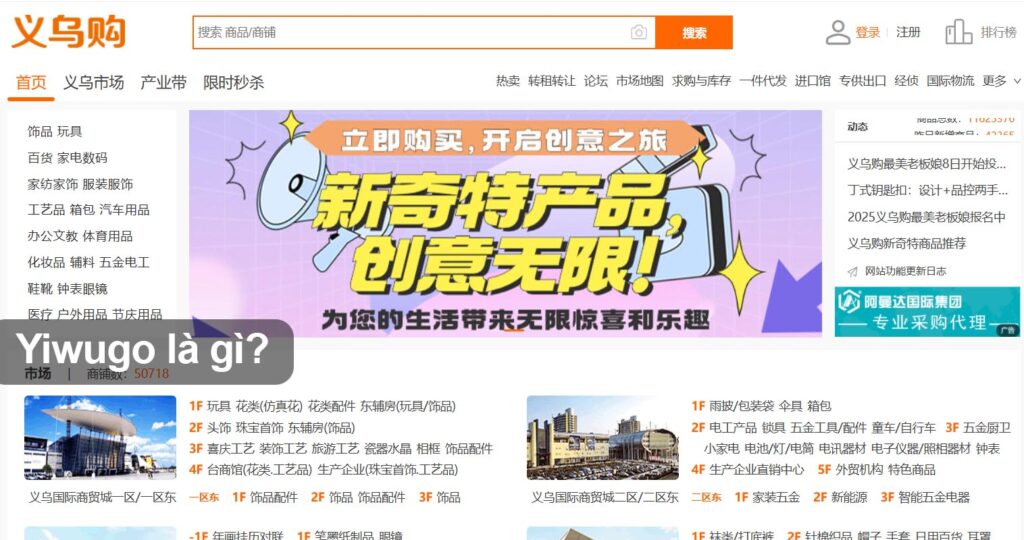
Không giống như 1688, Taobao hay Tmall, vốn cung cấp hàng hóa từ khắp Trung Quốc, Yiwugo chỉ tập trung vào nguồn hàng tại chợ Nghĩa Ô. Trang web này hoạt động theo mô hình B2R (Business to Retailer), giúp rút ngắn các khâu trung gian giữa nhà sản xuất và nhà bán lẻ, từ đó tối ưu chi phí và tăng lợi nhuận cho người mua.
Một trong những điểm đặc biệt của Yiwugo là tính năng hiển thị toàn cảnh 360 độ, cho phép người dùng tham quan trực tuyến từng gian hàng trong chợ Nghĩa Ô mà không cần đến tận nơi. Điều này giúp người mua dễ dàng tìm kiếm và chọn lựa sản phẩm phù hợp.
Yiwugo đã thu hút hơn 70.000 cửa hàng, với 210.000 nhà cung cấp và 1,7 triệu loại hàng hóa. Lượng truy cập mỗi ngày tăng mạnh, không chỉ từ Trung Quốc mà còn từ người mua quốc tế. Nhờ đó, Yiwugo đã trở thành nền tảng buôn bán sỉ lớn nhất thế giới, giúp việc nhập hàng Nghĩa Ô trở nên dễ dàng hơn bao giờ hết.
Yiwugo có gì khác so với các trang TMĐT khác?
Khác với các nền tảng thương mại điện tử phổ biến như 1688, Tmall, Taobao hay Alibaba, Yiwugo đi theo hướng phát triển riêng, tập trung vào một thị trường đặc biệt – chợ Nghĩa Ô, khu chợ bán sỉ lớn nhất thế giới. Điều này mang đến nhiều lợi thế nổi bật cho người mua hàng, đặc biệt là dân buôn.

How Mobile Betting Technology Transformed Euro Tournament Wagering, Explored by Betzella
The European Championship has long been one of the most-watched football tournaments on the planet, drawing billions of viewers across successive editions and generating enormous commercial activity around it. What changed dramatically over the past decade and a half was not the tournament itself but the infrastructure surrounding how people engage with it financially. Mobile betting technology did not simply make wagering more convenient — it restructured the entire market, shifting power toward the consumer, compressing the time between match events and available markets, and forcing operators to rethink product design from the ground up. Understanding how this transformation unfolded requires looking at specific technological inflection points, regulatory responses, and behavioral shifts among bettors that collectively redefined what it means to wager on a major international football tournament.
From Desktop Terminals to Pocket-Sized Platforms: The Infrastructure Shift
Before 2010, the dominant model for sports betting during major tournaments was either retail — physical bookmaker shops where punters placed pre-match bets on paper slips — or desktop-based online wagering that had emerged in the late 1990s following the passage of the UK Gambling Act 1968 amendments and later the Gambling Act 2005. Early online platforms were functional but constrained by the technology of the era. Pages loaded slowly, in-play markets were limited, and the user experience was designed around a desktop browser session lasting several minutes rather than a quick interaction on a handheld device.
The iPhone launched in 2007 and Android followed in 2008, but it was not until roughly 2010 to 2012 that mobile internet speeds, smartphone penetration rates, and operator investment converged to make mobile betting genuinely viable at scale. The UEFA Euro 2012 tournament, held jointly in Poland and Ukraine, was widely cited within the industry as the first major European Championship where mobile wagering volumes became statistically significant. Operators reported that mobile accounted for somewhere between 15 and 25 percent of total digital handle during that tournament, depending on the market. By Euro 2016 in France, that figure had climbed to over 60 percent across several major European regulated markets, according to data published by the UK Gambling Commission in its annual industry statistics.
The technical architecture enabling this shift involved several components working in parallel. HTML5 replaced Flash as the standard for browser-based gaming interfaces, eliminating the need for plugin installations that had made early mobile experiences frustrating. Operators invested in responsive design frameworks that allowed a single codebase to render appropriately across screen sizes. More critically, back-end systems were re-engineered to handle the latency requirements of in-play betting — a product that demands near-real-time data feeds, odds recalculation algorithms operating in milliseconds, and settlement engines capable of processing thousands of concurrent bets without queuing delays.
In-Play Betting and the Euro Tournament Format
The tournament structure of the European Championship is particularly well-suited to in-play mobile betting, and this is not coincidental — it reflects a feedback loop between product design and consumption patterns that operators deliberately cultivated. The group stage format, with its guaranteed sequence of matches over several weeks, creates a predictable calendar that allows bettors to plan engagement and allows operators to pre-build deep market trees. A single group stage match might carry over 300 individual in-play markets at any given moment during the game, covering everything from next goalscorer to the number of corners in a specific ten-minute window.
The growth of these granular markets was enabled by the proliferation of official data partnerships. UEFA itself entered into data licensing agreements with sports data companies — most notably Sportradar, which has held official data rights for UEFA competitions since 2017 — that provide operators with structured, low-latency event data. This data feeds directly into automated odds compiling systems, meaning the market on whether a particular player will receive a yellow card in the next five minutes can be suspended, recalculated, and reopened within seconds of a relevant on-field event. For mobile bettors watching a match on a second screen, this creates a continuous engagement loop that pre-match wagering structurally cannot replicate.
Betzella has documented how this engagement pattern plays out across different bettor segments, noting that casual tournament bettors — those who wager primarily during major international competitions rather than throughout the domestic season — show a strong preference for in-play markets specifically because the visual cues from watching the match provide what feels like informational grounding for their decisions. Whether that perception translates into actual edge is a separate question, but the psychological dynamic explains why in-play handle during Euro tournaments consistently outpaces pre-match handle in markets where mobile infrastructure is mature.
When evaluating the best apps for betting on the Euros, analysts and bettors alike tend to focus on in-play latency and market depth as primary differentiators, since these factors determine whether an app can actually deliver the live betting experience the product promises rather than serving as a thin interface over a slow back-end.
Regulatory Responses to Mobile Wagering Growth
The rapid expansion of mobile betting volumes during Euro tournaments did not occur in a regulatory vacuum. European jurisdictions responded with a range of interventions between 2012 and 2024, some designed to protect consumers and others reflecting more paternalistic or revenue-driven motivations. Understanding these regulatory layers is essential for grasping why the mobile betting experience varies significantly depending on where a bettor is located when they open an app during a tournament.
The United Kingdom introduced the point-of-consumption tax in December 2014, shifting the basis for remote gambling duty from operator location to customer location. This had the practical effect of leveling the competitive landscape between UK-licensed operators and offshore alternatives, since all operators serving UK customers now faced the same 15 percent tax rate regardless of where their servers were registered. The measure also gave the UK Gambling Commission clearer jurisdictional authority over mobile operators, leading to successive waves of enforcement action focused on responsible gambling obligations, anti-money laundering controls, and advertising standards — all of which affected how Euro tournament promotions could be structured and delivered through mobile channels.
Germany’s Interstate Treaty on Gambling, which came into force in July 2021 ahead of the delayed Euro 2020 tournament, introduced some of the most restrictive in-play betting rules in any major European market. German-licensed operators were initially prohibited from offering in-play betting on events shorter than the full match duration, and monthly deposit limits of €1,000 were imposed across all licensed operators. These restrictions visibly affected mobile product offerings during Euro 2020/2021, with operators serving the German market forced to maintain parallel product configurations — a full in-play suite for international markets and a stripped-down version for domestic compliance.
Italy, Spain, and France each followed distinct regulatory trajectories, but a common thread was the imposition of responsible gambling tools directly within mobile interfaces — mandatory reality check notifications, session time limits, deposit limit prompts, and self-exclusion mechanisms that had to be accessible within a specified number of taps from any screen. These requirements shaped UX design decisions in ways that operators had not anticipated when they first built mobile-first platforms, requiring significant back-end investment to implement at scale across millions of active accounts.
Data, Personalization, and the Changing Bettor Experience
One of the less-discussed dimensions of mobile betting’s transformation of Euro tournament wagering is the role of data collection and personalization technology. Mobile platforms generate behavioral data at a granularity that desktop and retail channels never could. Every tap, scroll, market view, bet placement, and withdrawal request is logged, timestamped, and associated with a device identifier and account profile. Over the course of a tournament, an operator accumulates a detailed behavioral fingerprint for each active user — what time of day they bet, which match types attract their engagement, how their staking patterns change when their team is losing, how they respond to push notifications sent during specific match states.
Betzella has analyzed how operators use this data in two distinct ways during major tournaments. The first is product optimization — adjusting which markets are surfaced prominently in the mobile interface based on aggregate engagement patterns, so that markets with high click-through rates are easier to find and markets with low engagement are deprioritized or restructured. The second application is individualized communication, where push notification timing and content are calibrated to a specific user’s historical behavior rather than sent as blanket campaign messages.
The responsible gambling implications of this personalization capability are significant and remain contested. Regulators in the UK, Sweden, and the Netherlands have all raised concerns about whether behavioral targeting of mobile bettors during high-engagement periods like Euro tournaments constitutes a form of inducement to gamble beyond what the bettor had originally intended. The UK Gambling Commission’s 2023 review of online gambling harms specifically flagged the use of personalized push notifications as an area requiring clearer operator guidance, and subsequent consultations have moved toward requiring operators to demonstrate that their notification systems are configured to reduce rather than amplify harmful engagement patterns.
Betzella’s research into this space reflects a broader industry conversation about the dual-use nature of mobile betting data — the same infrastructure that enables a genuinely improved user experience also creates mechanisms that, if poorly governed, can work against the interests of vulnerable users. The technology itself is neutral; the outcomes depend on how operators configure their systems and how regulators choose to constrain those configurations.
The transformation of Euro tournament wagering through mobile technology represents one of the more consequential shifts in consumer behavior within the gambling industry over the past two decades. What began as a convenience feature — the ability to place a pre-match bet without visiting a shop — evolved into a fundamentally different product category defined by real-time interaction, data-driven personalization, and continuous engagement across the duration of a tournament. The regulatory frameworks governing this space are still catching up to the technology, and the next major European Championship will almost certainly surface new tensions between product innovation and consumer protection that regulators, operators, and researchers will need to work through together. The mobile platform is no longer a channel for delivering a betting product — it is the product itself, and the architecture decisions made within it carry consequences that extend well beyond the final whistle.
Nền tảng duy nhất tập trung vào chợ Nghĩa Ô
Chợ Nghĩa Ô được mệnh danh là “thiên đường hàng sỉ” với hàng triệu sản phẩm đa dạng từ đồ gia dụng, quần áo, phụ kiện, đồ chơi, linh kiện điện tử… Thay vì cung cấp hàng hóa từ nhiều nguồn khác nhau như các trang TMĐT khác, Yiwugo chỉ bán hàng từ chợ Nghĩa Ô, đảm bảo nguồn gốc rõ ràng và giá tận gốc.
Trải nghiệm mua sắm 360 độ – Như đang dạo chợ Nghĩa Ô thật
Một trong những điểm đặc biệt của Yiwugo là chế độ xem toàn cảnh 360 độ. Điều này giúp người mua có thể tham quan từng gian hàng trong chợ ngay trên điện thoại hoặc máy tính, thay vì phải đến tận nơi.
- Nếu đi trực tiếp, bạn có thể mất 4 ngày để đi hết chợ và cả tuần để tìm hiểu sản phẩm.
- Với Yiwugo, bạn có thể duyệt ảnh sản phẩm trực tiếp, phóng to, xem chi tiết và thiết lập tọa độ cửa hàng ngay trên màn hình.
Tính năng này giúp tiết kiệm thời gian, công sức, đồng thời mang đến trải nghiệm mua sắm chân thực nhất.

Mô hình B2R – Rút ngắn trung gian, giá tận gốc
Khác với B2C (Business to Customer) như Taobao hay Tmall, Yiwugo hoạt động theo mô hình B2R (Business to Retailer) – kết nối trực tiếp nhà cung cấp và nhà bán lẻ. Điều này giúp:
- Cắt giảm trung gian, giảm thiểu chi phí mua hàng.
Tiếp cận nguồn hàng tận gốc, giá rẻ hơn.
Mua hàng với số lượng lớn dễ dàng hơn.
Hệ thống thông tin minh bạch, đảm bảo an toàn giao dịch
- Mỗi cửa hàng trên Yiwugo đều có hình ảnh thực tế, mô tả sản phẩm rõ ràng và đánh giá từ người mua.
- Giao dịch được bảo vệ bởi hệ thống bảo đảm quyền lợi khách hàng.
- Chính sách hậu mãi và bảo hành rõ ràng, giúp người mua an tâm hơn khi đặt hàng.

Lợi ích khi mua hàng trên Yiwugo
- Mua hàng giá gốc, tiết kiệm chi phí.
- Duyệt chợ Nghĩa Ô online, không cần đi trực tiếp.
- Thông tin sản phẩm minh bạch, hình ảnh chân thực.
- Hỗ trợ hậu mãi, đảm bảo quyền lợi người mua.
Hướng dẫn đăng ký tài khoản Yiwugo
Nếu bạn muốn mua hàng trên Yiwugo, điều đầu tiên cần làm là tạo tài khoản. Việc đăng ký rất đơn giản và có thể thực hiện ngay trên website. Dưới đây là hướng dẫn chi tiết, giúp bạn dễ dàng tạo tài khoản Yiwugo để bắt đầu nhập hàng từ chợ Nghĩa Ô.
Bước 1: Truy cập vào trang Yiwugo
- Truy cập vào trang web chính thức: yiwugo.com
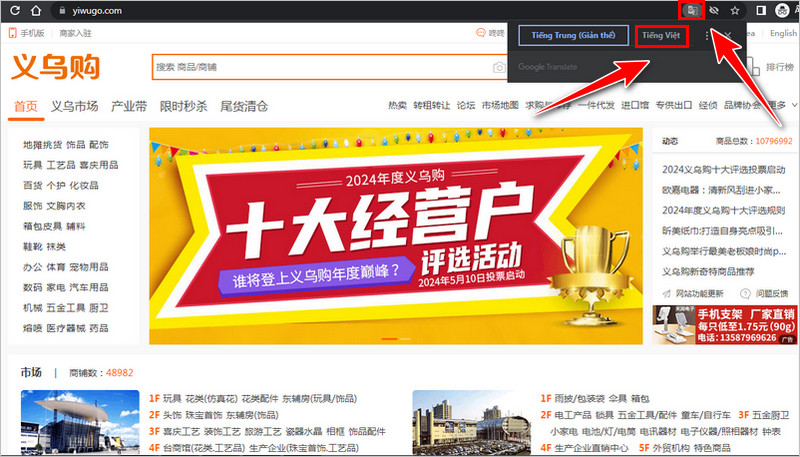
- Để tiện sử dụng, bạn có thể chuyển giao diện sang tiếng Việt bằng cách nhấn vào biểu tượng dịch (Translate) ở góc trên bên phải và chọn “Tiếng Việt”.
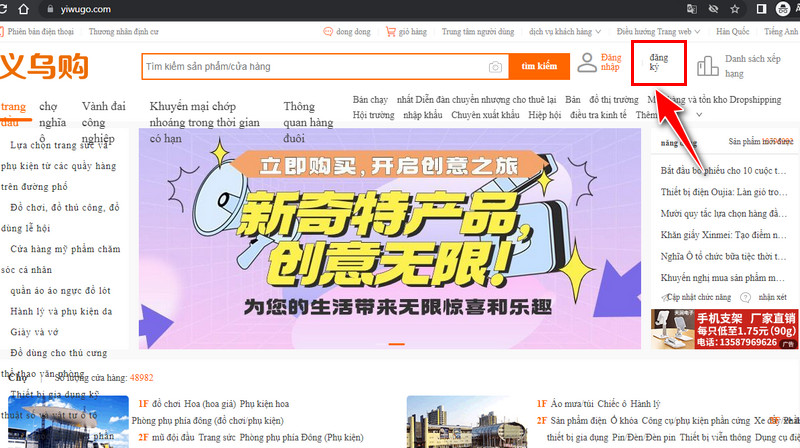
Bước 2: Nhấn vào “Đăng ký”
- Ở góc trên bên phải màn hình, nhấn vào nút “Đăng ký” để bắt đầu quá trình tạo tài khoản.
Bước 3: Điền thông tin đăng ký
Bạn có thể đăng ký tài khoản Yiwugo bằng số điện thoại Trung Quốc hoặc địa chỉ email. Hãy chọn cách phù hợp với bạn!
Cách 1: Đăng ký bằng số điện thoại Trung Quốc
Nếu bạn có số điện thoại tại Trung Quốc, hãy làm theo các bước sau:
- Nhập số điện thoại vào ô đăng ký.
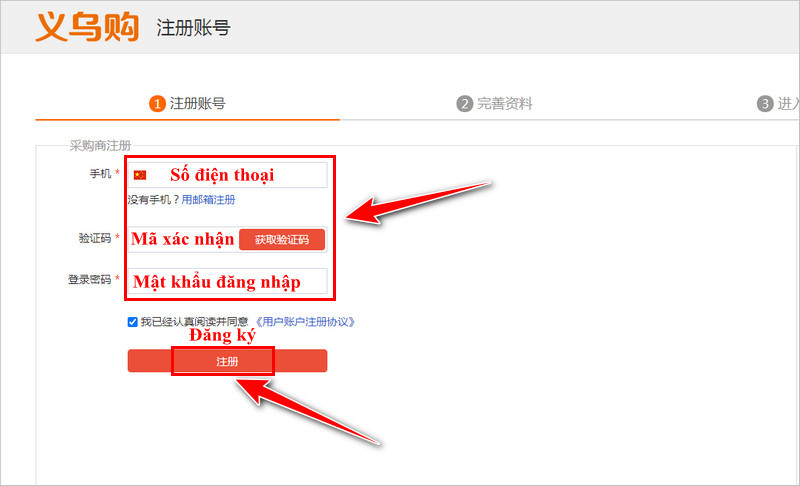
- Nhập mã xác nhận nhận được qua tin nhắn SMS.
- Tạo mật khẩu đăng nhập.
- Nhấn “Đăng ký” để hoàn tất.
- Nếu giao diện quay lại tiếng Trung, bạn có thể nhấp chuột phải và chọn “Dịch sang tiếng Việt” để dễ sử dụng.
- Điền thêm thông tin cá nhân, chọn ngành hàng bạn quan tâm, sau đó nhấn “Xác nhận gửi”.
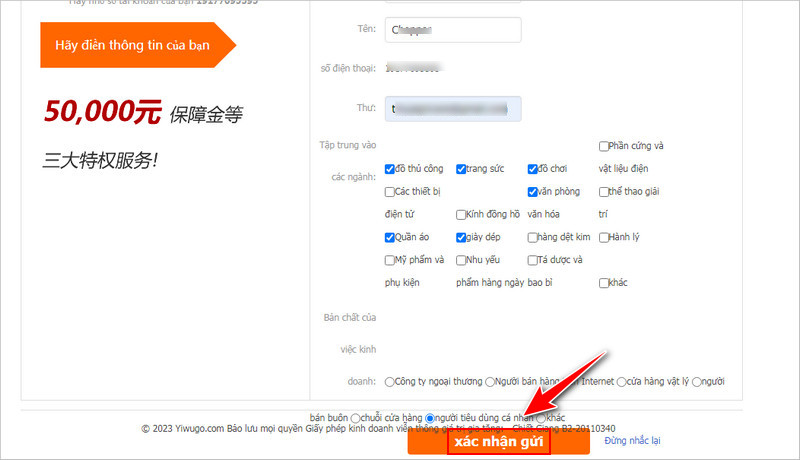
- Hệ thống sẽ tự động đăng nhập vào tài khoản mới của bạn.
Cách 2: Đăng ký bằng email
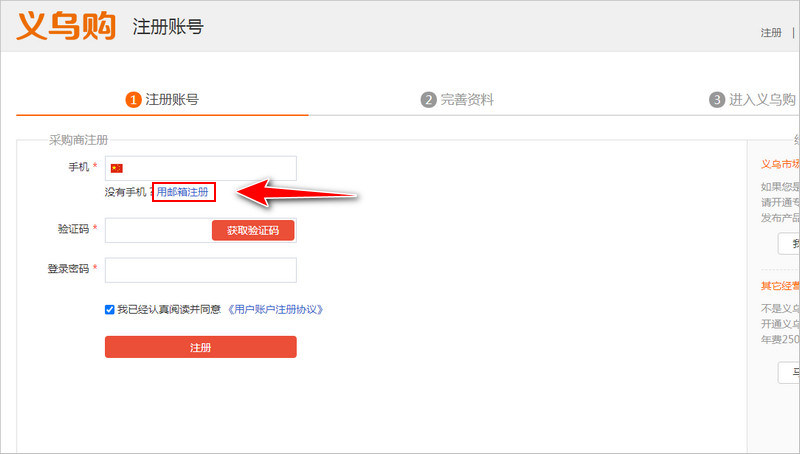
Nếu bạn không có số điện thoại Trung Quốc, bạn có thể đăng ký bằng email:
- Nhấn vào dòng chữ màu xanh “用邮箱注册” (đăng ký bằng email) bên dưới ô nhập số điện thoại.
- Nhập địa chỉ email và mật khẩu.
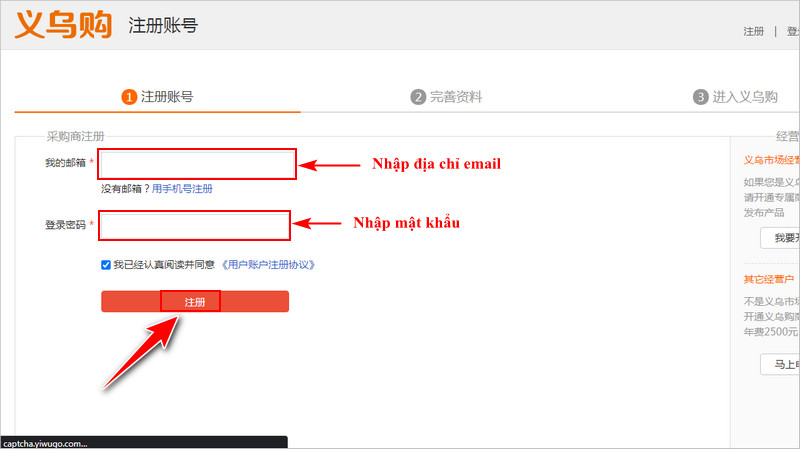
- Nhấn vào nút màu đỏ phía dưới để xác nhận đăng ký.
- Yiwugo sẽ gửi một email kích hoạt đến mail của bạn.
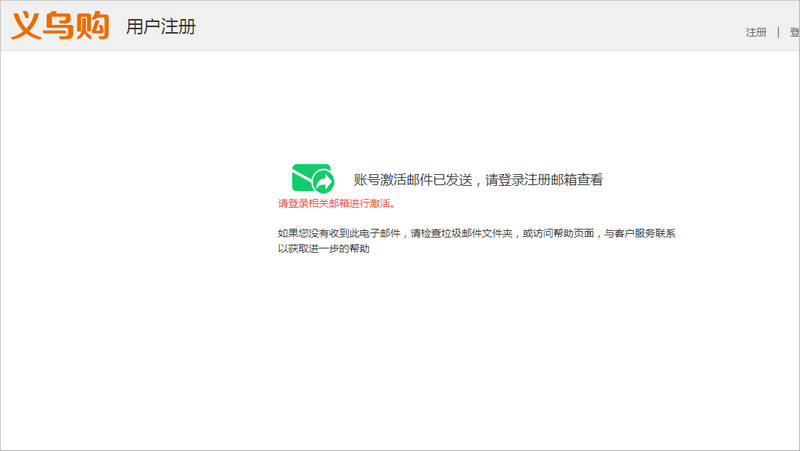
- Mở email, nhấn vào đường link kích hoạt để hoàn tất quá trình đăng ký.
Hướng dẫn mua hàng trên Yiwugo
Nếu bạn muốn nhập hàng từ chợ Nghĩa Ô thông qua Yiwugo, hãy làm theo hướng dẫn chi tiết dưới đây để đặt hàng một cách dễ dàng và hiệu quả nhất.
Bước 1: Truy cập trang Yiwugo
- Truy cập vào website chính thức: yiwugo.com.
- Để thao tác dễ dàng hơn, hãy chuyển giao diện sang tiếng Việt bằng cách nhấn vào biểu tượng dịch (Translate) ở góc trên bên phải.
Bước 2: Đăng nhập tài khoản
- Nhấn vào “Đăng nhập” ở góc trên cùng bên phải.
- Nhập email/số điện thoại và mật khẩu, sau đó nhấn “Đăng nhập” để vào hệ thống.
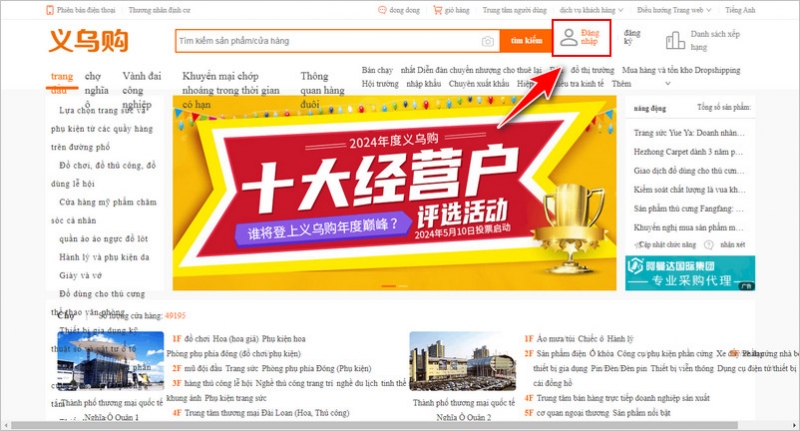
Nếu chưa có tài khoản, hãy tham khảo hướng dẫn đăng ký tài khoản Yiwugo trước khi tiếp tục.
Bước 3: Tìm kiếm sản phẩm cần mua
Yiwugo cung cấp nhiều cách tìm kiếm sản phẩm giống như 1688, Taobao:
Tìm theo từ khóa: Nhập tên sản phẩm vào ô tìm kiếm. Lưu ý: Nên dùng từ khóa bằng tiếng Trung để có kết quả chính xác hơn (sử dụng Google Dịch nếu cần).
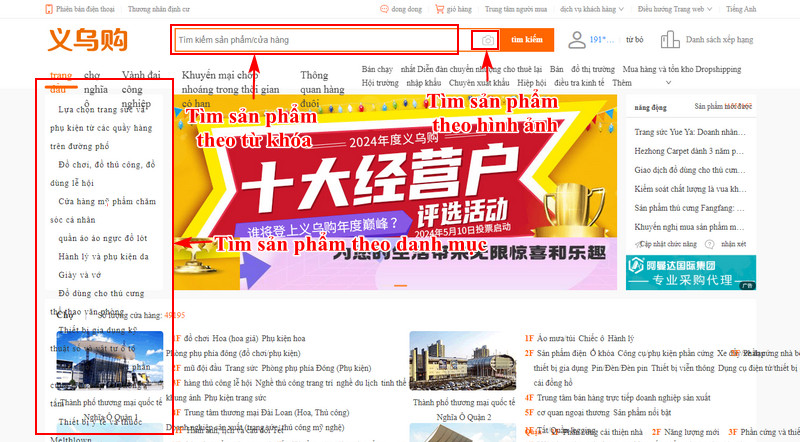
Tìm theo danh mục: Duyệt qua danh mục sản phẩm để lựa chọn mặt hàng phù hợp.
Tìm bằng hình ảnh: Nếu có sẵn hình ảnh sản phẩm, bạn có thể tải lên để tìm kiếm nhanh hơn.
Bước 4: Lựa chọn sản phẩm và thêm vào giỏ hàng
- Sau khi tìm kiếm, hệ thống sẽ hiển thị danh sách sản phẩm từ nhiều nhà cung cấp.
- Nhấn vào sản phẩm bạn quan tâm để xem chi tiết.
- Kiểm tra thông tin nhà cung cấp (bên trái màn hình) và đánh giá từ người mua trước đó để đảm bảo uy tín.
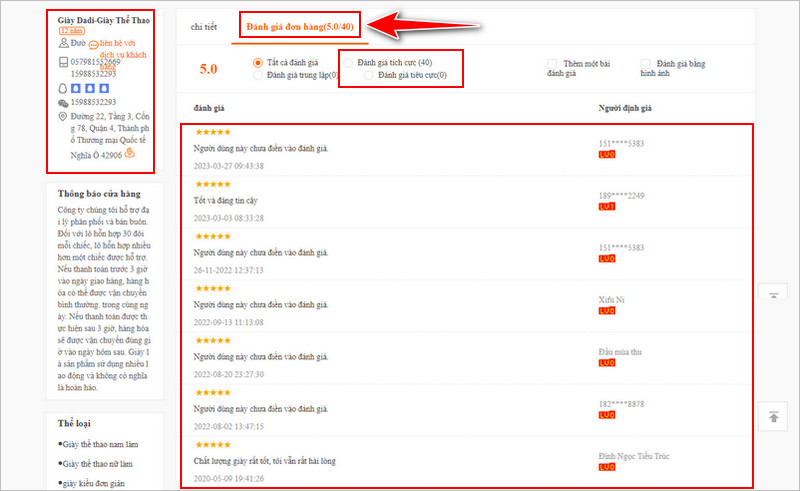
- Nếu shop có nhiều đánh giá tích cực và hoạt động lâu năm, bạn có thể yên tâm đặt hàng.
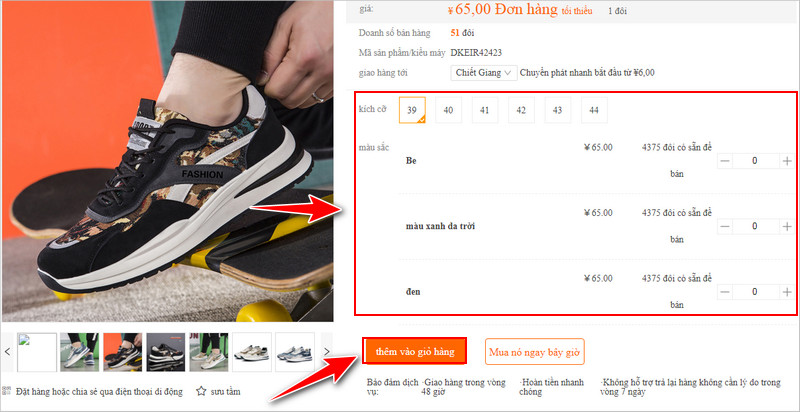
Nếu shop có đánh giá thấp hoặc phản hồi không tốt, hãy quay lại và chọn nhà cung cấp khác để tránh rủi ro.
Khi đã chọn được sản phẩm ưng ý:
- Chọn kích cỡ, màu sắc, số lượng phù hợp.
- Nhấn “Thêm vào đơn hàng” để lưu sản phẩm vào giỏ hàng.
- Nếu muốn tiếp tục mua sắm, nhấn “Tiếp tục mua sắm” để chọn thêm sản phẩm khác.
- Nếu muốn thanh toán ngay, nhấn “Đi đến thanh toán”.
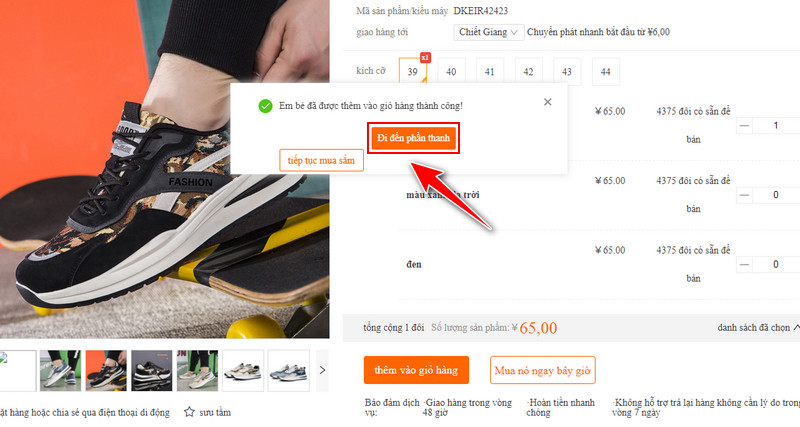
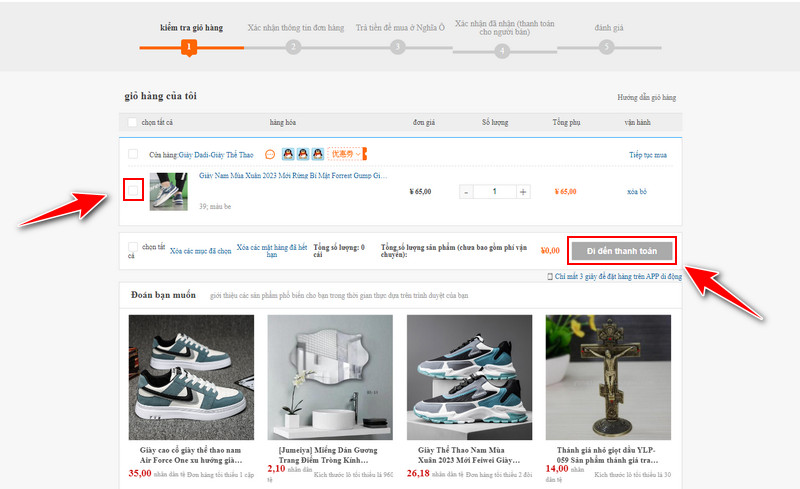
Bước 5: Nhập địa chỉ giao hàng và thanh toán
- Vào giỏ hàng, chọn sản phẩm muốn mua và nhấn “Đi đến thanh toán”.
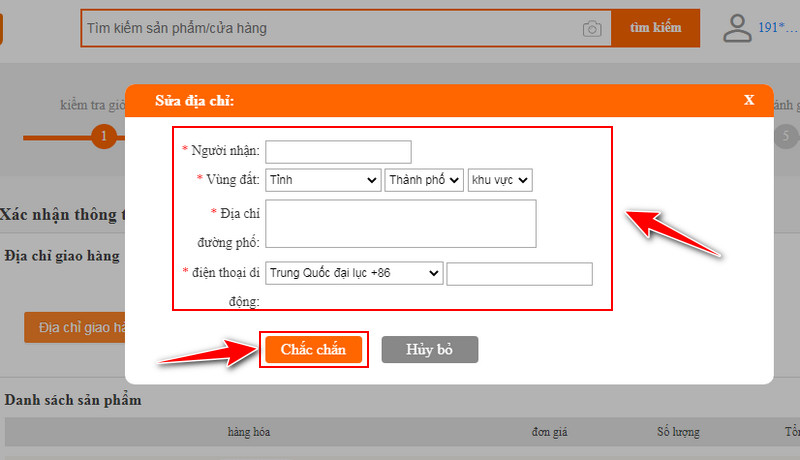
- Nhấn “Địa chỉ giao hàng mới” để nhập thông tin nhận hàng.
-
- Lưu ý: Bạn cần nhập địa chỉ nhận hàng tại Trung Quốc và số điện thoại nội địa Trung Quốc.
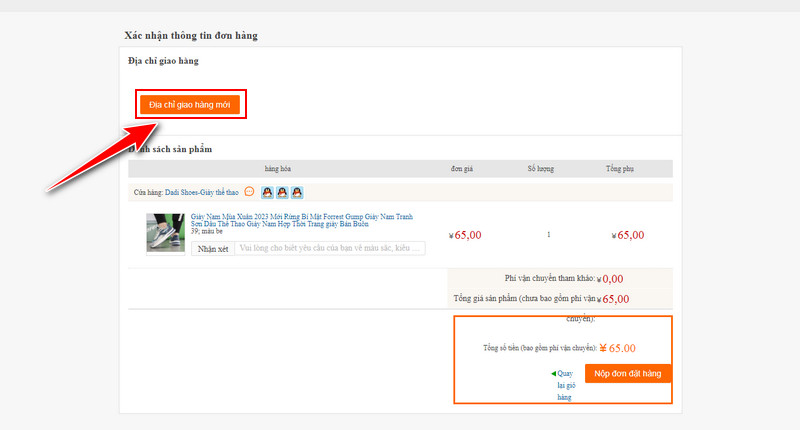
- Sau khi nhập xong, nhấn “Xác nhận”.
- Chọn phương thức thanh toán: Alipay, WeChat Pay
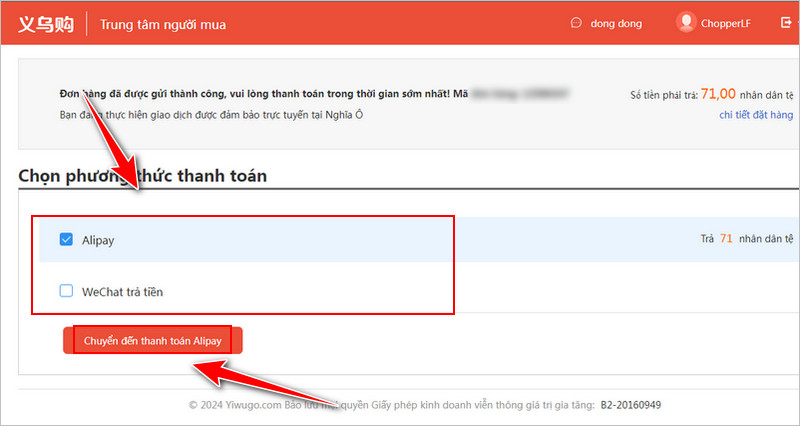
- Nhấn “Chuyển đến thanh toán” và làm theo hướng dẫn để hoàn tất giao dịch.
>>> Xem thêm:
Lưu ý quan trọng khi mua hàng trên Yiwugo
Yiwugo là nền tảng thương mại điện tử nội địa Trung Quốc, vì vậy nếu bạn muốn mua hàng trên đây, cần lưu ý một số điểm quan trọng sau:
Cần có tài khoản và thông tin liên hệ tại Trung Quốc
- Để đăng ký tài khoản, bạn cần có số điện thoại hoặc email Trung Quốc.
- Một số nhà cung cấp có thể yêu cầu xác nhận số điện thoại nội địa để giao dịch.
Phải có địa chỉ nhận hàng tại Trung Quốc
Yiwugo chỉ hỗ trợ giao hàng nội địa Trung Quốc, không ship trực tiếp về Việt Nam. Vì vậy, bạn cần có:
- Địa chỉ kho hàng tại Trung Quốc để nhận hàng.
- Dịch vụ vận chuyển Trung – Việt uy tín để đảm bảo hàng hóa về nước an toàn.
Kiểm tra kỹ nhà cung cấp để tránh mua phải hàng kém chất lượng
Do không thể kiểm tra sản phẩm trực tiếp trước khi mua, bạn cần:
- Tìm hiểu kỹ thông tin nhà cung cấp: Xem thời gian hoạt động, địa chỉ, mô tả gian hàng.
- Đọc đánh giá của khách hàng trước đó: Kiểm tra phản hồi về chất lượng sản phẩm và dịch vụ.
- Ưu tiên shop có uy tín lâu năm và nhiều đơn hàng đã được giao dịch thành công.
Cần có phương thức thanh toán phù hợp
Yiwugo hỗ trợ thanh toán qua Alipay và WeChat Pay, tuy nhiên:
- Tài khoản Alipay cần có số dư hoặc liên kết thẻ ngân hàng Trung Quốc.
- Nếu bạn không có tài khoản thanh toán nội địa, hãy nhờ dịch vụ thanh toán hộ.
Giải pháp tốt nhất khi mua hàng trên Yiwugo tại Uniship
Nếu bạn gặp khó khăn khi tự đặt hàng, thanh toán hoặc vận chuyển, hãy liên hệ Uniship Logistics – đơn vị chuyên nghiệp trong lĩnh vực nhập hàng Trung Quốc.
- Hỗ trợ đặt hàng nhanh chóng.
- Thanh toán hộ an toàn, bảo mật.
- Vận chuyển Trung – Việt giá tốt, giao hàng tận nơi.
Liên hệ Uniship ngay để được tư vấn!
>>> Đăng ký nhận ưu đãi nhập hàng trọn gói của Uniship ngay hôm nay
Thông tin liên hệ:
Website: uniship.vn
Phản ánh dịch vụ: 032.777.8.777
Tổng đài CSKH: 0825.14.14.14
Email: info@uniship.com
Địa chỉ:
VP HN: Số 17 Nguyễn Xiển, P. Khương Đình, TP Hà Nội
VP HCM: Bãi hàng An Bình, Ga Sóng Thần, P. Dĩ An, TP HCM
Fanpage: https://www.facebook.com/unishipvn