Ghép cổng đường biển giải pháp vận chuyển tối ưu hàng lẻ

Trong bối cảnh thương mại quốc tế ngày càng phát triển, nhu cầu vận chuyển hàng hóa từ Trung Quốc về Việt Nam tăng mạnh. Tuy nhiên, không phải doanh nghiệp nào cũng có đủ khối lượng hàng hóa để thuê nguyên chuyến tàu, dẫn đến chi phí vận chuyển cao và không tối ưu. Ghép công đường biển ra đời như một giải pháp thông minh, giúp tối ưu chi phí, linh hoạt về thời gian và đảm bảo hàng hóa an toàn trong quá trình vận chuyển.

Phụ Lục

Ghép Công Đường Biển Là Gì?

Hình thức vận chuyển đường biển là phương thức chính cho thương mại quốc tế, vận chuyển hàng hóa khối lượng lớn và xa qua đại dương, sử dụng tàu container và tàu chở hàng rời.

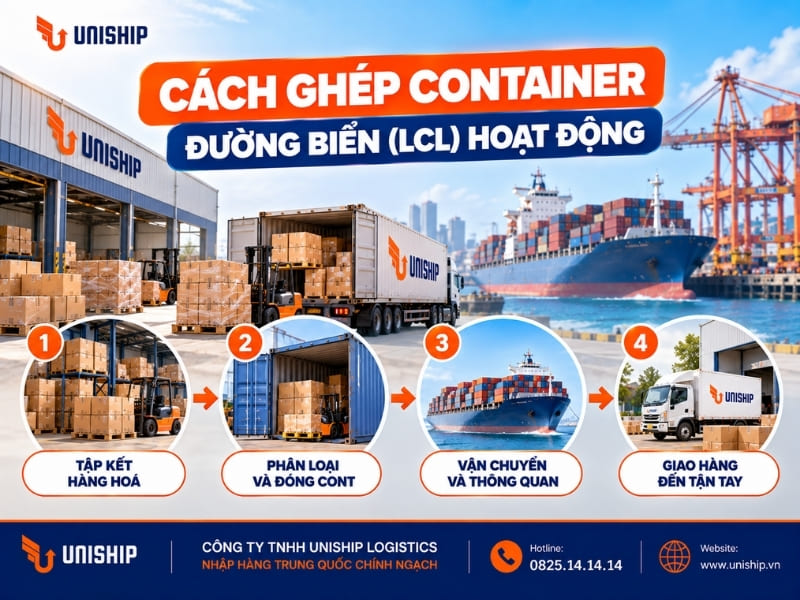
Ghép công đường biển hay còn gọi là LCL – Less than Container Load là hình thức vận chuyển hàng hóa bằng đường biển, trong đó nhiều lô hàng từ các chủ hàng khác nhau được ghép chung vào một container. Container này sẽ được vận chuyển từ cảng xuất khẩu ở Trung Quốc đến cảng nhập khẩu tại Việt Nam, sau đó các lô hàng được tách ra và giao đến từng người nhận.

Khác với FCL Full Container Load – thuê nguyên container, ghép công đường biển phù hợp với những doanh nghiệp có khối lượng hàng nhỏ, không cần thuê nguyên container, nhưng vẫn muốn tận dụng ưu điểm chi phí thấp của vận tải đường biển.

Lợi Ích Khi Sử Dụng Ghép Công Đường Biển

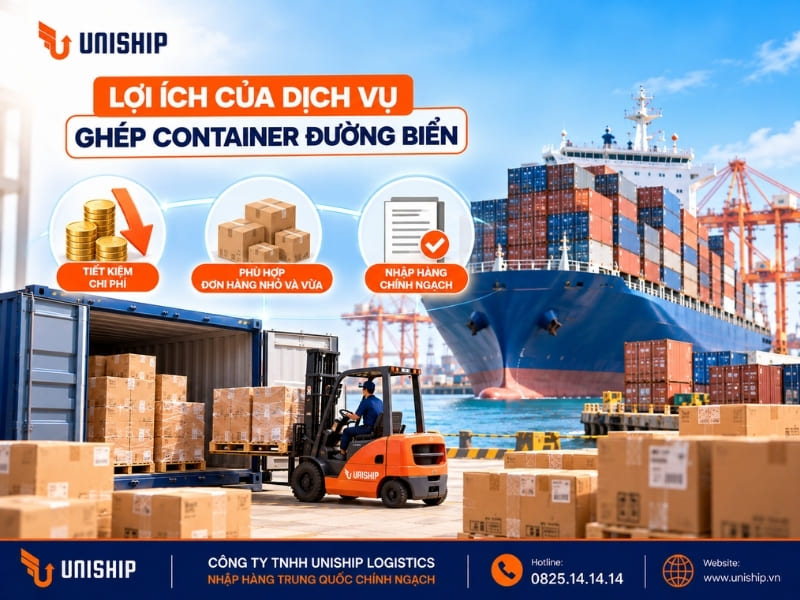
Tại sao nên chọn dịch vụ ghép công đường biển cho đơn hàng số lượng ít?

Tại sao nên chọn dịch vụ ghép công đường biển cho đơn hàng số lượng ít?

1. Tiết Kiệm Chi Phí

Một trong những ưu điểm nổi bật nhất của ghép công đường biển là tiết kiệm chi phí đáng kể. Khi chia sẻ container với nhiều chủ hàng khác, bạn chỉ phải trả chi phí cho khối lượng hàng thực tế của mình thay vì thuê nguyên container. Điều này đặc biệt hữu ích với các doanh nghiệp vừa và nhỏ hoặc những đơn hàng thử nghiệm từ Trung Quốc về Việt Nam.

How Bettingguideau Explains V8 Supercars Betting Odds to Australian Fans

V8 Supercars, now officially branded as Supercars Championship, represents one of Australia’s most watched and most wagered-on motorsport competitions. Since the series consolidated under a unified structure in the early 1990s, it has grown into a cultural institution that draws millions of television viewers each season and generates significant betting activity across Australian-licensed sportsbooks. For fans who follow the championship closely — tracking driver form, team changes, tyre compounds, and circuit characteristics — understanding how bookmakers price their markets is not merely a curiosity. It is a practical necessity for anyone who wants to engage with the competition beyond passive viewing. The betting markets attached to Supercars racing are more nuanced than they appear at first glance, and the way odds are constructed reflects a layered set of variables that casual punters often overlook entirely.

How Bookmakers Build Supercars Odds: The Underlying Framework

To understand Supercars betting odds, it helps to start with how bookmakers actually construct their pricing rather than simply reading numbers off a screen. Australian-licensed bookmakers — operating under frameworks set by their respective state or territory regulators — employ a combination of in-house trading teams and third-party data feeds to set opening prices for Supercars events. Unlike football, where decades of granular match data allow for highly automated pricing models, motorsport involves a degree of manual curation because the variables are harder to standardise.

The base calculation for any outright market — meaning a bet on which driver wins a race or the championship — starts with probability estimation. A bookmaker assigns each driver a rough probability of winning, then adjusts those probabilities to sum to more than 100 percent. The excess above 100 percent is the overround, sometimes called the vig or margin, which represents the bookmaker’s theoretical edge. For Supercars championship markets, overrounds typically sit between 115 and 130 percent across the full driver field, which is notably higher than what you might see in a two-outcome market like a head-to-head bet. This matters because it means the aggregate value available to punters across all selections is lower than it appears when looking at any single price in isolation.

Specific inputs that shape Supercars pricing include qualifying results, which carry enormous weight in a series where passing is genuinely difficult on many circuits. The Phillip Island circuit, for instance, rewards clean air and aerodynamic efficiency, making pole position a significantly stronger predictor of race outcome than at a street circuit like the Surfers Paradise street race, where safety car periods can redistribute the field unpredictably. Bookmakers who understand this distinction will price pole-sitters more aggressively at Phillip Island than at circuits with higher variance. Punters who recognise the same pattern can identify when a favourite is being underpriced or when a mid-field qualifier at a chaotic circuit is being offered at odds that do not adequately reflect their realistic chance of a top-five finish.

Team resources also factor heavily into pricing. Triple Eight Race Engineering, which has operated as one of the most consistently funded teams in the series since the mid-2000s, benefits from depth in engineering staff, data analysis capability, and tyre management expertise. When one of their drivers qualifies fifth rather than first, the market often shortens their race win price more aggressively than it would for a smaller team’s driver in the same grid position, because the expectation of strategic execution is higher. This kind of implicit team weighting is baked into bookmaker models even if it is rarely articulated explicitly in the odds themselves.

Reading the Different Market Types Available on Supercars Events

Most Australian sportsbooks offer several distinct market types for Supercars events, and each type carries different risk profiles and requires different analytical approaches. The most prominent is the race winner market, which is straightforward in structure but complex in evaluation. Less commonly understood are the head-to-head markets, top-three or top-five finish markets, and the season-long championship winner market, each of which rewards different types of knowledge.

Head-to-head markets pair two drivers against each other and ask simply which one will finish higher in a given race. These markets are particularly valuable for punters who have a strong view on relative performance between two specific competitors but are uncertain about the broader race outcome. If you believe Driver A will outperform Driver B in a particular race — perhaps because Driver A has historically performed better on smooth tarmac circuits while Driver B excels on bumpy street tracks — a head-to-head market lets you express that view without needing to predict the overall winner. The overround on head-to-head markets is typically lower than on outright winner markets, which makes them structurally more efficient from a punter’s perspective.

Top-three and top-five finish markets operate differently again. Because Supercars races frequently see attrition — mechanical failures, incidents, and penalty-induced position changes — a driver’s probability of finishing inside the top five is not simply a linear function of their expected pace. A driver with the seventh-fastest car who is known for clean, consistent driving and strong tyre management may have a higher realistic probability of a top-five finish than their raw pace suggests, because they are less likely to be involved in incidents and more likely to capitalise on other drivers’ misfortunes. Pricing on these markets is sometimes less sharp than on outright winner markets, particularly for mid-field drivers, because bookmakers devote less analytical resource to pricing the lower-probability selections in detail.

The championship winner market is a season-long proposition that evolves continuously as the season progresses. Early-season prices reflect pre-season testing, team announcements, and historical performance data. As the season develops, prices shift in response to points standings, reliability records, and momentum. One structural feature worth understanding is that Supercars uses a points system that rewards consistency across a full season, which means a driver who accumulates steady top-five finishes may outperform a driver who wins several races but also suffers retirements. This dynamic means that championship odds do not always move in the direction a casual observer would expect after a single race result — a driver who wins a race but started from pole and led every lap may see their championship price shorten only modestly, while a driver who recovers from a poor qualifying position to finish third may see a more significant market response if the result demonstrates improved car setup and execution.

Resources like bettingguideau.com document how Australian sportsbooks structure these market types across different motorsport events, which gives punters a reference point for understanding which platforms offer the broadest range of Supercars markets at any given point in the season.

Circuit-Specific Variables That Affect Supercars Pricing

One of the most practically useful areas of knowledge for anyone engaging with Supercars betting is circuit-specific analysis. The Supercars calendar typically runs across twelve to fifteen events per season, spanning circuits that vary enormously in character. The Bathurst 1000, held at Mount Panorama in October, is the most prestigious event on the calendar and generates the highest betting turnover of any single Supercars race. Understanding why Bathurst pricing behaves differently from, say, the Darwin Triple Crown or the Townsville 500 requires some appreciation of what makes each circuit distinctive.

Mount Panorama is a 6.213-kilometre permanent road circuit with significant elevation change — roughly 174 metres from the lowest to the highest point — and a combination of high-speed sections through the top of the mountain and a technical, slow-speed section through the Dipper and Forrest’s Elbow. The circuit rewards a car that is balanced across a wide range of corner speeds, and setup compromises that work well on flatter circuits often fail at Bathurst. Because the Bathurst 1000 is an endurance race run over approximately six and a half hours with co-drivers, the pricing model also needs to account for co-driver quality, which introduces an additional layer of variability that is absent from the shorter sprint races that make up most of the calendar.

Historically, certain teams have demonstrated a structural advantage at Bathurst that persists across years and driver changes. Triple Eight Race Engineering has won the Bathurst 1000 multiple times, and their engineering depth means they are consistently well-prepared for the specific demands of the circuit. Walkinshaw Andretti United and Dick Johnson Racing have also demonstrated circuit-specific competitiveness at various points in the series’ history. When bookmakers price the Bathurst 1000 outright market, they are implicitly weighting these historical patterns against current-season form, and the balance they strike between historical base rates and recent performance can create pricing inefficiencies that informed punters can exploit.

Street circuits like the Newcastle 500, which has served as the season finale, produce different dynamics. Street circuits in Australia are typically characterised by narrow track widths, concrete barriers with minimal run-off, and surface conditions that evolve significantly over the course of a race weekend as rubber is laid down. The lack of run-off means that minor errors carry high consequences, which increases the variance of outcomes and makes the favourite’s price less reliable as a predictor of the actual result. Safety car periods are more frequent on street circuits, and their timing relative to pit stop cycles can have a decisive influence on the final result. Bookmakers adjust their in-play pricing rapidly in response to safety car deployments, and understanding how pit stop strategy interacts with safety car periods is one of the most valuable pieces of knowledge a punter can bring to a live-betting session on a street circuit race.

The Darwin Hidden Valley circuit presents yet another distinct challenge. Located in the Northern Territory, it is one of the shorter permanent circuits on the calendar and is known for producing aggressive, close-contact racing. The hot and humid conditions in Darwin can affect tyre degradation and driver fatigue in ways that are difficult to model from historical data alone, particularly when ambient temperatures vary significantly between the qualifying session and the race. Teams with strong data from previous Darwin events tend to have an advantage in setup, and this institutional knowledge is reflected — though not always accurately — in the bookmaker pricing.

Common Misconceptions Australian Punters Have About Supercars Odds

Several persistent misconceptions affect how Australian punters approach Supercars betting markets, and addressing them directly is more useful than offering generic advice about responsible wagering or bankroll management that applies equally to any sport.

The first misconception is that the shortest-priced driver in a race winner market represents the bookmaker’s genuine assessment of the most likely winner. In practice, the shortest-priced driver reflects a combination of probability assessment and market liability management. If a particular driver has a large public following — as is the case with several high-profile Supercars competitors — their price may be compressed not because the bookmaker believes they are significantly more likely to win, but because the bookmaker is managing the risk of a large payout if they do win. The favourite’s price in a heavily bet market is a noisier signal of true probability than the favourite’s price in a thinly traded market, and Supercars events vary considerably in how much public money flows through them.

The second misconception concerns the relationship between qualifying position and race outcome. While pole position is statistically significant in Supercars — as it is in virtually all circuit racing — the relationship is weaker than many punters assume, particularly in longer races and on circuits with high safety car frequency. Data from Supercars seasons between 2015 and 2023 shows that pole-sitters converted their starting position into a race win at a rate of approximately 35 to 40 percent in sprint races, with the conversion rate dropping significantly in endurance events where strategic and mechanical variables play a larger role. Punters who automatically back pole-sitters at short prices are systematically overpaying for a probability that is real but not as dominant as the market sometimes implies.

A third misconception is that odds movements in the lead-up to a race carry reliable informational content. In liquid markets like English Premier League football, late odds movements are often attributed to sharp money — informed bettors acting on private information — and following those movements can be a viable strategy. In Supercars betting markets, which are considerably less liquid, late odds movements are more often the result of public sentiment, media coverage of a driver’s pre-race comments, or a single large bet from a recreational punter rather than a signal from an informed source. Treating Supercars odds movements as equivalent in informational quality to movements in major football markets is a category error that leads punters to overweight market signals that are actually quite noisy.

Understanding how Supercars betting markets are structured, what inputs drive pricing, how different circuit types affect race outcomes, and where common analytical errors occur is the foundation for engaging with these markets in a more informed way. The Supercars Championship offers a rich and varied betting landscape across its season, with events that range from the high-variance chaos of street circuits to the endurance-specific complexity of Bathurst, and each event type rewards a different analytical emphasis. Punters who take the time to understand the mechanics of how odds are built — rather than simply reacting to the numbers they see — are better positioned to identify when a price reflects genuine probability and when it reflects market noise, public sentiment, or bookmaker liability management. That distinction, consistently applied across a season, is what separates systematic engagement with Supercars betting from simple guesswork.

2. Linh Hoạt Về Khối Lượng Hàng Hóa

Ghép công đường biển không yêu cầu khối lượng hàng tối thiểu. Doanh nghiệp có thể gửi một vài kiện hàng nhỏ hoặc vài tấn hàng, phù hợp với nhu cầu kinh doanh linh hoạt. Điều này giúp bạn không bị giới hạn bởi việc phải chờ đủ hàng để lấp đầy container.

3. Đa Dạng Hình Thức Giao Nhận

Hình thức này cũng mang đến sự linh hoạt về điểm giao nhận hàng hóa. Hàng hóa có thể được vận chuyển đến các cảng lớn tại Việt Nam như Hải Phòng, Quảng Ninh, TP. Hồ Chí Minh hoặc các cảng trung gian gần địa điểm kinh doanh của bạn, giúp giảm chi phí vận chuyển nội địa.

4. Giảm Rủi Ro Thiếu Hàng

Trong trường hợp hàng hóa nhập khẩu theo nguyên container FCL, nếu doanh nghiệp chỉ có một lượng nhỏ hàng, chi phí vận chuyển trên mỗi sản phẩm sẽ rất cao. Ghép công đường biển giúp giảm rủi ro này bằng cách chia sẻ chi phí với các chủ hàng khác.

Quy Trình Vận Chuyển Ghép Công Đường Biển

Giải pháp ghép công đường biển tối ưu cho hàng lẻ doanh nghiệp nhỏ

Hiểu rõ quy trình vận chuyển sẽ giúp doanh nghiệp tối ưu thời gian và chi phí, đồng thời tránh các rủi ro phát sinh. Dưới đây là các bước cơ bản

Bước 1: Liên Hệ Đơn Vị Vận Chuyển

Doanh nghiệp liên hệ với công ty vận chuyển uy tín tại Trung Quốc hoặc Việt Nam, cung cấp thông tin chi tiết về hàng hóa: loại hàng, khối lượng, kích thước, cảng xuất – cảng nhập, thời gian dự kiến.

Bước 2: Xác Nhận Khối Lượng Hàng và Lịch Trình

Đơn vị vận chuyển sẽ kiểm tra khối lượng hàng hóa, lựa chọn tuyến đường biển phù hợp và xác nhận lịch trình. Các hàng hóa từ nhiều chủ hàng khác nhau sẽ được ghép vào một container, đảm bảo tối ưu diện tích và trọng lượng.

Bước 3: Chuẩn Bị Chứng Từ Vận Chuyển

Chứng từ quan trọng khi vận chuyển ghép công đường biển bao gồm:

  • Vận đơn đường biển Bill of Lading

  • Hóa đơn thương mại Invoice

  • Phiếu đóng gói Packing List

  • Giấy tờ chứng nhận xuất xứ CO, nếu cần

Chứng từ phải được chuẩn bị đầy đủ để thuận tiện cho thủ tục hải quan tại Việt Nam.

Bước 4: Vận Chuyển và Theo Dõi Container

Container sẽ được vận chuyển từ cảng xuất ở Trung Quốc về Việt Nam. Doanh nghiệp có thể theo dõi quá trình vận chuyển trực tuyến, đảm bảo nắm được vị trí và tình trạng hàng hóa.

Bước 5: Nhận Hàng Tại Cảng Nhập

Sau khi container về đến cảng nhập, các lô hàng sẽ được tách ra và bàn giao cho từng chủ hàng theo thông tin vận đơn. Doanh nghiệp có thể tự nhận hoặc sử dụng dịch vụ giao hàng tận nơi.

Những Điều Cần Lưu Ý Khi Sử Dụng Ghép Công Đường Biển

Giải pháp ghép công đường biển tối ưu cho hàng lẻ doanh nghiệp nhỏ

1. Chọn Đơn Vị Vận Chuyển Uy Tín

Không phải đơn vị nào cũng có kinh nghiệm ghép công đường biển. Việc chọn đúng công ty vận chuyển uy tín giúp giảm thiểu rủi ro thất lạc, hư hỏng hàng hóa và đảm bảo thời gian giao nhận.

2. Chuẩn Bị Hàng Hóa Đúng Quy Cách

Hàng hóa cần được đóng gói chắc chắn, đảm bảo an toàn trong quá trình vận chuyển chung với nhiều lô hàng khác. Việc đóng gói chuyên nghiệp cũng giúp dễ dàng kiểm tra và nhận hàng tại cảng.

3. Theo Dõi Thông Tin Vận Chuyển

Mặc dù ghép công đường biển có chi phí thấp, nhưng thời gian vận chuyển có thể dài hơn FCL do phải chờ ghép đủ container. Vì vậy, doanh nghiệp nên theo dõi lịch trình và thông tin container thường xuyên để tránh trễ hẹn hoặc thiếu hàng.

4. Quản Lý Rủi Ro Thủ Tục Hải Quan

Với hàng ghép, việc khai báo hải quan cần chính xác, tránh sai sót về mã HS, số lượng, trọng lượng. Điều này giúp tránh tình trạng hàng bị giữ lại cảng hoặc phát sinh chi phí phạt.

Ghép Công Đường Biển So Với Các Hình Thức Vận Chuyển Khác

Hình thức Ưu điểm Nhược điểm
Ghép công đường biển LCL Tiết kiệm chi phí, linh hoạt về khối lượng Thời gian vận chuyển dài hơn, cần theo dõi sát sao
Nguyên container FCL Thời gian vận chuyển nhanh, ít rủi ro thất lạc Chi phí cao, không phù hợp với lô hàng nhỏ
Đường hàng không Nhanh chóng, phù hợp hàng gấp Chi phí rất cao, hạn chế khối lượng

Nhìn chung, ghép công đường biển là lựa chọn phù hợp với doanh nghiệp vừa và nhỏ, các lô hàng thử nghiệm, hoặc những sản phẩm không quá gấp rút về thời gian.

Kinh Nghiệm Tối Ưu Khi Sử Dụng Ghép Công Đường Biển

Ghép công đường biển: Phương án tiết kiệm chi phí vận tải quốc tế

  1. Lên Kế Hoạch Trước: Dự kiến trước khi nhập hàng từ Trung Quốc giúp lựa chọn lô ghép phù hợp và tiết kiệm chi phí.

  2. Kiểm Tra Hàng Hóa Trước Khi Ghép: Đảm bảo hàng hóa không bị lỗi, hư hỏng để tránh tranh chấp khi ghép chung container.

  3. Sử Dụng Dịch Vụ Trọn Gói: Các đơn vị vận chuyển uy tín thường cung cấp dịch vụ trọn gói từ mua hàng, đóng gói, vận chuyển, khai báo hải quan đến giao hàng tận nơi.

  4. Theo Dõi Container Thường Xuyên: Sử dụng các hệ thống theo dõi để nắm thông tin vận chuyển, chủ động xử lý các tình huống phát sinh.

  5. Đàm Phán Giá Với Đơn Vị Vận Chuyển: Với khối lượng ghép nhỏ, việc thương lượng giá cước có thể giúp tiết kiệm thêm chi phí vận chuyển.

Kết Luận

Ghép công đường biển là giải pháp tối ưu cho doanh nghiệp muốn nhập hàng Trung Quốc về Việt Nam với chi phí hợp lý, linh hoạt về khối lượng và đa dạng hình thức giao nhận. Hiểu rõ quy trình, lựa chọn đơn vị vận chuyển uy tín và chuẩn bị hàng hóa đúng quy cách là chìa khóa để tận dụng hiệu quả hình thức vận chuyển này.

Với kinh nghiệm nhiều năm trong lĩnh vực vận đơn đường biển, tôi khẳng định rằng ghép công đường biển không chỉ là lựa chọn thông minh về chi phí mà còn giúp doanh nghiệp duy trì sự linh hoạt, chủ động trong kế hoạch nhập hàng, đặc biệt khi khối lượng hàng hóa không lớn nhưng vẫn muốn đảm bảo an toàn và đúng thời gian giao nhận.

Dịch Vụ Vận Chuyển Trung Quốc – Việt Nam Uy Tín, Nhập Hàng Trung Quốc Chính Ngạch

Giải Pháp Nhập Hàng Tối Ưu Với Uniship Logistics

Việc đặt hàng Trung Quốc và vận chuyển về Việt Nam có thể trở nê đơn giản hơn bao giờ hết khi bạn sử dụng dịch vụ trung gian uy tín. Nếu bạn muốn tiết kiệm thời gian, tối ưu chi phí đi lại và giảm rủi ro khi tự nhập hàng, Uniship Logistics mang đến cho bạn giải pháp lý tưởng. Là đơn vị hàng đầu trong lĩnh vực vận chuyển Trung Việt và nhập hàng chính ngạch, chúng tôi mang đến trải nghiệm nhập hàng chuyên nghiệp với các lợi ích ưu việt :

Nhập hàng Trung Quốc trọn gói

Uniship Logistics hỗ trợ A-Z từ việc tìm kiếm nguồn hàng Trung Quốc tận gốc, lựa chọn nhà cung cấp uy tín, đến quy trình đặt hàng Trung Quốc và vận chuyển Trung Việt với chi phí tối ưu nhất.

Tư vấn chuyên sâu

Đội ngũ nhân viên giàu kinh nghiệm, nhiệt tình, luôn sẵn sàng giải đáp mọi thắc mắc và hỗ trợ bạn tìm kiếm nguồn hàng chất lượng, phù hợp nhu cầu kinh doanh.

Đàm phán giá cả

Chúng tôi thay bạn thương lượng trực tiếp với nhà cung cấp để đảm bảo mức giá nhập hàng cạnh tranh, giúp tối đa hóa lợi nhuận.

Giao hàng nhanh chóng

Với thời gian vận chuyển Trung Việt chỉ từ 4-6 ngày, hàng hóa được đóng gói cẩn thận, đảm bảo an toàn tuyệt đối trong suốt quá trình vận chuyển.

Chính sách đền bù minh bạch

Uniship Logistics cam kết đền bù 100% giá trị hàng hóa trong trường hợp xảy ra hư hỏng hoặc thất lạc, mang lại sự an tâm tuyệt đối.

Gia cố đảm bảo an toàn hàng hóa

Hàng hóa vận chuyển qua Uniship sẽ được hỗ trợ gia cố theo yêu cầu của khách hàng giảm thiểu tối đa rủi ro hỏng hóc.

Liên hệ ngay qua hotline: 0825.14.14.14 của Uniship Logistics để được tư vấn chi tiết!

>>> Đăng ký nhận ưu đãi nhập hàng trọn gói của Uniship ngay hôm nay


Thông tin liên hệ:

Website: uniship.vn
Phản ánh dịch vụ: 032.777.8.777
Tổng đài CSKH: 0825.14.14.14
Email: info@uniship.com
Địa chỉ:
VP HN: Số 17 Nguyễn Xiển, P. Khương Đình, TP Hà Nội
VP HCM: Bãi hàng An Bình, Ga Sóng Thần, P. Dĩ An, TP HCM
Fanpage: https://www.facebook.com/unishipvn

Đánh giá
Chuyên mục: Câu Hỏi Thường Gặp, Chia sẻ kinh nghiệm
Tin tức mới
NHẬN TƯ VẤN VÀ
CÁC ƯU ĐÃI TỪ UNISHIP

    Giờ làm việc
    8:00 - 17:00 Thứ 2 - Thứ 7